Most Italy travel lists are written by people who spent two weeks here and called themselves experts. They rank the same ten places in the same order with the same photos and the same advice about “authentic experiences” that stopped being authentic in 2014.
This is not that list.
I live in Italy. I have been to all of these places, more than once, across different seasons. Some of them deserve their reputation entirely. Some of them are being sold to you incorrectly. A few of them will change how you think about travel.
Here is the honest ranking.
ROME — AND YOU ALREADY KNOW THIS, BUT NOT THE WAY YOU THINK
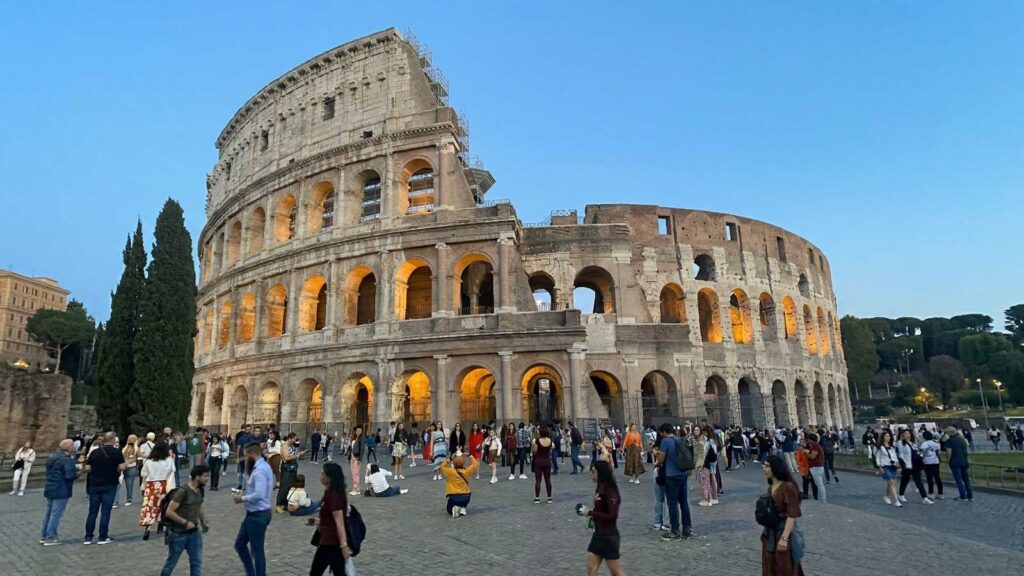
Rome is first because there is no argument. Two thousand years of civilisation stacked on top of each other, still functioning, still beautiful, still completely capable of overwhelming you if you are not prepared.
But every travel blog sends you to the same five places in the same order and leaves out the information that actually makes Rome worth visiting. The Colosseum, the Vatican, the Trevi Fountain — yes, obviously. But also: San Luigi dei Francesi, two minutes from the Pantheon, with three original Caravaggios on the wall and no entry fee. The Borghese Gallery with Bernini’s Apollo and Daphne, which is better than anything in the Vatican Museums and which sells out weeks in advance because nobody tells you to book it before you leave home. The Pastificio Guerra near the Spanish Steps, where you eat two types of handmade pasta in a cardboard bowl for €5, standing up, next to Romans on their lunch break.
Rome rewards preparation and punishes improvisation. Book the Colosseum thirty days in advance in peak season. Book the Borghese Gallery before you book your hotel. Know that the Vatican Museums entrance and St. Peter’s Basilica entrance are on completely different sides of the Vatican walls, fifteen minutes apart — people miss their timed slots every single day because nobody tells them this.
One thing most tourists discover too late: since February 2026 the Trevi Fountain requires a €2 timed entry ticket during the day. Full details on Trevi Fountain rules and fines.
Four days minimum. Five is better. Before you go, read the complete Rome Travel Guide 2026.
NAPLES — THE MOST MISUNDERSTOOD CITY IN ITALY
Every person who has never been to Naples has an opinion about Naples. Dirty. Dangerous. Not worth it. Every person who has actually been to Naples tells you to go back.
Naples is the most alive city in Italy. It is also the most honest — it does not pretend to be anything other than what it is. The streets are chaotic, the traffic is real, and the pizza is the best on earth. Not the best in Italy. The best on earth. There is a reason Neapolitan pizza has UNESCO heritage status while the rest of the world is still arguing about it.
The historic center is a UNESCO World Heritage Site and it looks like a city that never decided which century it wanted to live in — Roman ruins visible through grates in the floor of a metro station, Baroque churches next to street food vendors, Caravaggio paintings in churches so dark you need a minute for your eyes to adjust. Spaccanapoli, the straight street that splits the city in two, is one of the most visually overwhelming walks in Europe.
Pompeii is forty minutes away by Circumvesuviana train. Herculaneum is twenty-five minutes and significantly less crowded, better preserved, and more humanly moving because the objects are still in the houses where people left them when Vesuvius buried everything in 79AD. Most tourists skip Herculaneum entirely. Do not skip Herculaneum.
Two days in Naples minimum. Add a day for Pompeii or Herculaneum. Add another day if you want the Amalfi Coast, which you should do by ferry, not by road, because the road is not designed for the amount of tourist traffic it carries in summer.
Not sure where to stay? Read the full guide to where to stay in Naples.
SICILY — NOT A DESTINATION, AN EDUCATION
Sicily is not Italy the way Rome is Italy. It is its own thing — Greek temples, Arab-Norman architecture, North African light, volcanic soil that produces food unlike anything on the mainland. The island has been conquered by so many civilisations that its identity became something entirely original.
Palermo is the capital and it deserves more credit than it gets. The Ballarò market in the morning is one of the most intense sensory experiences in the country — loud, crowded, full of produce and street food and colour in a way that has nothing to do with tourism. The Palatine Chapel inside the Royal Palace has 12th-century Byzantine mosaics that cover every surface of the interior. Gold everywhere. An overwhelming, impossible room.
Taormina is beautiful and overrun in July and August. Go in May or September and it is extraordinary — Greek theatre with Etna behind it, the sea below, the town running along a cliff edge above it all.
The food argument ends here. Arancini from a street vendor in Palermo. Pasta con le sarde. Granita and brioche for breakfast at 8am. Caponata that makes every other version you have eaten taste like a rough draft. Cannoli filled fresh in front of you, not sitting in a case from this morning.
A week minimum to do it properly. Rent a car after Palermo — the train network outside the capital is slow and the island rewards the ability to stop wherever you want.
PUGLIA — THE PLACE ITALIANS GO WHEN THEY ARE TIRED OF TOURISTS
Italians discovered Puglia twenty years ago. The rest of the world discovered it ten years ago. It has not been ruined yet but it is moving in that direction, which means the window for experiencing it correctly is still open but not indefinitely.
The heel of the boot. Dry, flat, full of ancient olive trees that are a thousand years old and look it. The sea on both sides — Adriatic and Ionian — is the clearest in Italy. The food is simultaneously the simplest and the best: orecchiette with cime di rapa, burrata that was made this morning, focaccia from a bakery in Bari that has been open since before your grandmother was born.
Alberobello and the trulli are worth seeing despite the tourism. The valley of trulli outside the main town, where people actually live in them, is better than the main street. Lecce is called the Florence of the South because of the Baroque architecture but the comparison undersells it — Lecce has a completely distinct character, warmer, more provincial in the best possible way. Ostuni is the white city on the hill that every Instagram account in Italy has photographed but which, seen from a distance on an afternoon in late September, still earns every photograph.
Go in June. Go in September. July and August are full and hot and the prices double. The shoulder seasons here are some of the best travel weeks Italy offers.
FLORENCE — CORRECT, BUT SMALLER THAN PEOPLE EXPECT
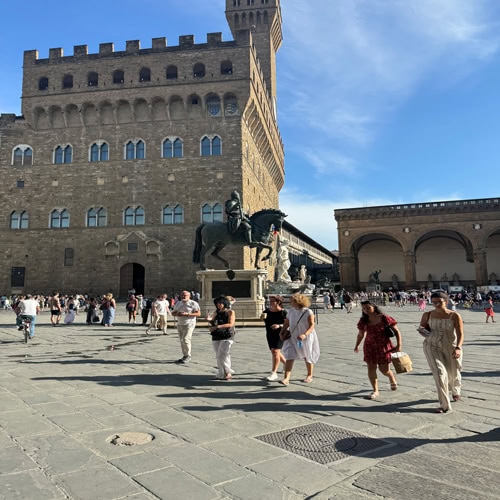
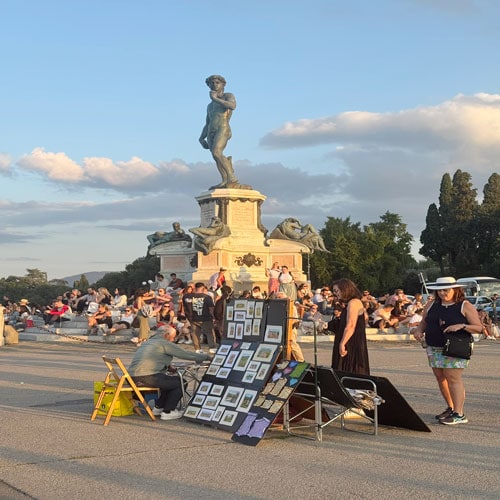
Florence is every travel blog’s second entry after Rome and it deserves to be there. The Uffizi Gallery is the greatest collection of Renaissance painting in the world. Brunelleschi’s dome is still the greatest architectural achievement of the 15th century. Michelangelo’s David at the Accademia is one of those moments where you stand in front of something and understand why people have been travelling to see it for five hundred years.
But Florence is a small city. The historic center is walkable in a day. The problem is that most tourists try to do the Uffizi, the Accademia, the Duomo, Piazzale Michelangelo, the Ponte Vecchio, and three meals in forty-eight hours and end up exhausted and unable to name what they actually experienced.
One thing a day. Uffizi in the morning, Oltrarno neighborhood in the afternoon. Accademia first thing, San Miniato al Monte and the views over the city in the late afternoon. The Boboli Gardens are quiet and beautiful and almost nobody sits in them. The Mercato Centrale has a food hall upstairs that is genuinely good and not the tourist trap that the ground floor market has become.
Three full days is enough if you are focused. Five days if you want to actually understand the city rather than collect it. Before you go, read 22 things that can ruin your Florence trip
BOLOGNA — THE PLACE ITALIANS RECOMMEND TO OTHER ITALIANS
Bologna is not on most tourist itineraries and this is Italy’s worst-kept secret. The city has the oldest university in the Western world, 38km of covered porticos that let you walk across the entire city in the rain without getting wet, a food culture so dominant that the rest of Italy simply calls it La Grassa — the fat one — and leaves it at that.
Tortellini in brodo. Tagliatelle al ragù — the real Bolognese sauce, which is nothing like what the world calls Bolognese, richer and slower and without a drop of tomato in the traditional version. Mortadella eaten standing up with a glass of Pignoletto. The Mercato di Mezzo, which is the closest thing to a perfect food market in northern Italy.
The towers — the Due Torri — are leaning, medieval, and climbable. The church of San Petronio on the main piazza is unfinished on the outside, which tells you something about the ambition of the project, and extraordinary inside. The Pinacoteca Nazionale has a room of paintings that most people walk past on the way to Florence and should not.
One night minimum. Two nights if you take food seriously. An easy day trip from Florence, forty minutes by high-speed train.
THE DOLOMITES — COMPLETELY DIFFERENT FROM EVERYTHING ELSE ON THIS LIST
Everything above is about history, food, cities, coasts. The Dolomites are about landscape in a way that has nothing to do with any of it.
The rock formations are pink at sunrise and at sunset — a phenomenon called Enrosadira that the Ladin people who have lived here for centuries turned into mythology. The villages are Austrian in character because the South Tyrol changed hands after the First World War and the German-speaking culture never left. The food is schüttelbrot and speck and canederli and nothing like what you ate in Rome or Palermo.
Cortina d’Ampezzo is the famous name. It is also expensive and full of people who come to be seen rather than to be in the mountains. The better entry points are Ortisei, Selva di Val Gardena, and Corvara — smaller, more authentic, and still inside one of the most dramatic landscapes in Europe.
Go in summer for hiking, in winter for skiing, in September for the light and the lack of crowds. Driving is the only serious way to move around — the valleys are narrow and the roads are spectacularly engineered.
VENICE — GO, BUT DO IT CORRECTLY OR DO NOT BOTHER
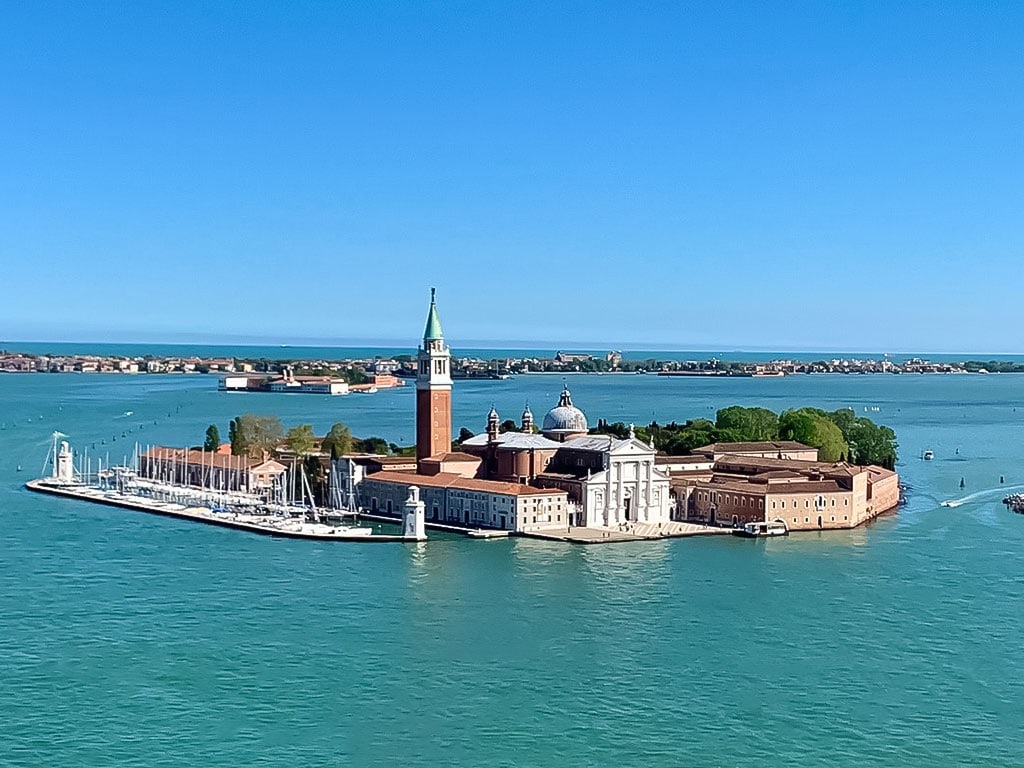
Venice is sinking slowly and in the meantime it is being buried under a different kind of weight: twenty million tourists a year in a city that has fifty thousand permanent residents and was designed for neither number.
This does not mean do not go. It means go outside of July and August. It means stay overnight — the city empties completely after 7pm when the day trippers leave and the Venice that actually exists, which is silent and waterlogged and unlike anywhere on earth, becomes accessible. It means walk away from the Rialto and San Marco into Cannaregio and Dorsoduro and Castello where the streets narrow and there is nobody selling carnival masks or Murano glass pendants.
The Accademia Gallery for Bellini and Giorgione and Titian. The Frari church for Titian’s Assumption, which is the best altarpiece in Italy. The Scuola Grande di San Rocco for a Tintoretto ceiling that takes an hour to understand fully. The Fondamente Nove at dawn with the northern lagoon completely still and the islands of the lagoon visible in the distance.
Go in November. Go in February. Go in April before Easter. The city in the off-season has a completely different quality — grey and damp and beautiful in a way that July can never be.
If you are still deciding when to go, read the full guide to the cheapest time to visit Venice
CINQUE TERRE — ONE VISIT, DONE CORRECTLY, THEN MOVE ON
Cinque Terre is five small villages on a stretch of Ligurian coast that became one of the most photographed places in Italy the moment social media existed. The hiking trails between them, the coloured houses, the pesto, the views — all of it is real and all of it is also extremely crowded from April to October.
The correct way to do it: arrive by train early in the morning before the tour groups from Florence and Milan arrive, walk the trail between Monterosso and Vernazza which is the best section, eat anchovies and focaccia, take the train back in the early afternoon before the heat and the crowds peak. One day. Done.
Spending three nights in Cinque Terre when you could spend those nights in Puglia or Palermo or Bologna is not the best use of your Italy trip. It is beautiful. It has been seen. See it once and correctly, then go somewhere that rewards more time.
SARDINIA — FOR WHEN YOU WANT ITALY TO STOP AND LET YOU BREATHE
Everything above is about culture, history, food, architecture. Sardinia is about something different. It is the closest thing to wilderness that Italy has — an island the size of a small country with a coastline that competes with anything in the Mediterranean and an interior that most tourists never reach.
The sea in the north, around the Costa Smeralda, is genuinely the colour it looks in photographs. The water is transparent to depths that feel impossible. The beaches of the south, around Chia and Villasimius, are quieter and equally extraordinary.
The interior is Bronze Age nuraghi — stone towers built three thousand years ago by a civilisation that left no written record, scattered across the island in numbers that suggest a denser population than the landscape implies today. The food is different from the mainland: culurgiones, the stuffed pasta of Ogliastra, pane carasau, bottarga grated over everything, roast suckling pig cooked over myrtle wood.
Go in June. Go in September. July and August in Sardinia is a negotiation with the rest of Europe for a spot on a beach. The shoulder seasons are warm, the sea is swimmable, and the island remembers itself.
THE LIST IN ONE LINE EACH
Rome: non-negotiable, prepare properly. Naples: go without prejudice. Sicily: give it a week. Puglia: go before everyone else does. Florence: two focused days. Bologna: the one Italians keep for themselves. Dolomites: a different Italy entirely. Venice: off-season only. Cinque Terre: one day, done. Sardinia: June or September, no exceptions.
Italy rewards the traveller who slows down, eats where there are no photographs on the menu, and accepts that the best moments are never in the itinerary.
Planning the journey itself? Read the complete guide to the best way to travel around Italy
This guide is impressive — the best I have come across. I am Italian and have lived on and off in Italy over many years, though I am currently living overseas again. Your information has opened my eyes even wider to this stunningly beautiful country. Thank you!
Your delightful descriptions of the many wonders Italy offers have whetted my appetite to return once again and to visit all those northern areas mentioned, but at a much slower pace, including Rome and Naples — a place that is truly out of this world, with incredibly warm and fun Neapolitans. I would also love to discover Puglia in particular.