If you’re planning a trip to Rome, seeing the Sistine Chapel is likely at the top of your list. But a successful visit requires some insider knowledge that goes beyond what most guidebooks tell you.
Three things have changed and most travel articles have not caught up. The Last Judgment restoration finished in March, so the fresco is fully visible again — you may be reading guides that say otherwise.
Ticket prices changed, and third-party resellers are charging double for the official €25 ticket. And the door visitors used as a shortcut to St. Peter’s Basilica is now reserved for tour groups only. Here is what you actually need to know before you go.
Sistine Chapel Restoration 2026: What Visitors Need to Know
If you have searched for the Sistine Chapel restoration recently, here is the up-to-date answer.
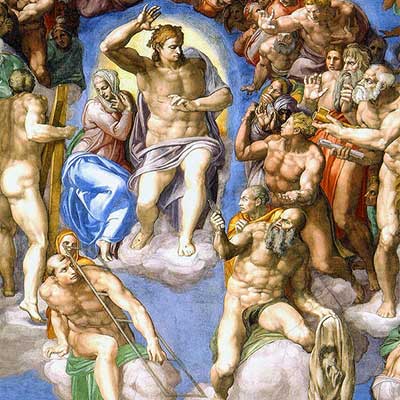
The Vatican Museums carried out an extraordinary maintenance intervention on Michelangelo’s Last Judgment — the fresco on the altar wall — between February 1 and March 27, 2026. The Vatican officially announced the completion of the work on March 27, in time for Holy Week and Easter.
Three things matter for anyone visiting now.
The scaffolding is down and the Last Judgment is fully visible again. During the three-month intervention the altar wall was hidden behind a scaffold draped with a high-definition reproduction. That installation has been removed.
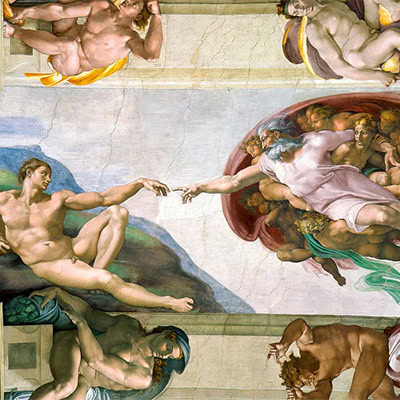
The ceiling was never covered. The maintenance focused only on the altar wall. The nine Genesis panels, including the Creation of Adam, remained fully visible the entire time.
The Last Judgment is being seen in a state that has not been visible since 1994. Restorers from the Vatican Museums’ Painting and Wood Materials Restoration Laboratory removed a film of calcium lactate — the residue left by roughly five to six million visitors a year, when human sweat and breath react with the plaster — that had gradually muted the colors and flattened the contrasts. The cleaning has restored the chiaroscuro and the deeper blues and pinks Michelangelo originally painted.
If you have read travel articles describing scaffolding or partial coverage, those articles were written between January and March 2026 and have not been updated. As of spring 2026, both the ceiling and the altar wall are fully visible.
How Long It Takes to Reach the Sistine Chapel in the Vatican
Many visitors don’t realize that the Sistine Chapel isn’t a separate building. It’s located deep inside the Vatican Museums, at the end of the museum route, so getting there takes time.
There is no separate ticket and no separate entrance. To reach the chapel you enter the Vatican Museums on Viale Vaticano, walk through the museum corridors — the Gallery of the Candelabra, the Gallery of Tapestries, the Gallery of Maps, the Raphael Rooms — and the chapel is the final stop before the exit.
From the museum entrance to the chapel doors is a minimum of 30 to 45 minutes of walking, and that assumes you are not stopping to look at anything along the way. With crowds in peak season it can take longer.
The route is one-way. Once you pass certain points in the museum you cannot easily go back. This catches out visitors who try to walk straight to the chapel and see the rest of the museum afterwards. It is technically possible to loop back to the entrance by avoiding the exit signs after leaving the chapel, but you will be walking against a strong current of people moving in the opposite direction. Plan to see the museum on the way to the chapel, not after.
A common confusion: the Vatican Museums entrance and the entrance to St. Peter’s Basilica are not the same place. The museums entrance is on Viale Vaticano, on the north side of the Vatican walls. St. Peter’s Basilica is entered from St. Peter’s Square, on the east side. The two entrances are roughly a 15-minute walk apart. Tourists who go to the wrong gate miss their timed museum slot every day.
Vatican Tickets and Best Time to Visit the Sistine Chapel
The single most important piece of advice for visiting the Sistine Chapel: book your tickets in advance. The Vatican Museums welcome up to 30,000 visitors daily during peak season, creating lines that can stretch for hours.
Ticket Prices and Where to Book
The standard adult ticket costs €20 at the door. Booking online adds a €5 reservation fee, bringing the total to €25 per adult — and that online booking is what gives you the skip-the-line entry. Concessions are available for visitors aged 6 to 18, students under 26, and certain other categories. Children under 6 enter free.
Book directly through the official Vatican Museums website at tickets.museivaticani.va. This is the only authorised online seller and the price you see there is the real price. Third-party resellers sell the identical ticket at €30 to €45 by adding “service fees,” “skip-the-line guarantees,” or “priority access” — all of which are already included in the standard online booking. There is no faster ticket. The official online ticket is the skip-the-line ticket.
Tickets Are Nominative — Bring Photo ID
All Vatican Museums tickets are nominative. The name on the ticket must match the photo ID you present at the entrance, and staff do check. If you booked under one name and a different person tries to use the ticket, they will be turned away and the ticket will not be refunded. The same rule applies if you booked under a nickname or an abbreviated version of your name that does not match the document you carry.
Two practical points follow from this.
If you are buying tickets for a group, book each ticket under the name of the person who will use it — not under the booker’s name for the whole group. The system allows this. Most people don’t realise.
If your travel plans change and someone else takes your spot, you cannot simply hand over the ticket. The Vatican does not allow name changes after booking and tickets are non-refundable. Plan accordingly.
Best Time to Visit
For the best experience possible:
- Book early morning entry. Arriving with the first wave (8:00–9:00 AM) gives you a brief window when the chapel is relatively uncrowded.
- Consider off-peak timing. Late afternoon (after 2:00 PM) often sees smaller crowds as tour groups taper off.
- Friday and Saturday evening openings. From spring through autumn the Vatican Museums extend opening hours on Friday and Saturday evenings, typically until 8:00 PM or 10:30 PM depending on the season. These slots are dramatically quieter than daytime and remain one of the least-known options for visiting the Sistine Chapel without crowds.
When the Vatican Museums Are Closed
The Vatican Museums are closed every Sunday, with one exception: the last Sunday of the month, when entry is free from 9:00 AM to 2:00 PM. Free entry attracts enormous crowds — expect a queue of one to two hours and a chapel packed shoulder to shoulder. The museums are also closed on certain Catholic holidays, including January 1, January 6, Easter Sunday, and December 25. Always check the official calendar before booking flights around a Vatican visit.
What to Expect Inside the Sistine Chapel
The Sistine Chapel is smaller than most visitors expect — 40.93 meters long by 13.41 meters wide, with the famous ceiling 20.7 meters above you. The height is part of why the ceiling can feel distant in person despite looking enormous in photographs. The compact floor space is also why crowd management here is a challenge, especially during high season.
A few things to keep in mind before you walk in.
- Silence is requested, not always observed. Guards periodically remind visitors to maintain quiet, with calls of “silenzio” over a microphone. In practice the room is often loud, with conversations rising in volume between announcements and falling briefly afterwards. The rule exists to preserve the sacred atmosphere of what is still an active papal chapel. Whether or not other visitors observe it on the day you go is unpredictable.
- Photography is officially prohibited. Guards watch for phones and cameras and call out visitors who take pictures. The historical reason for the ban is rarely explained: when the chapel was restored between 1980 and 1994, the project was funded in part by the Japanese broadcaster Nippon TV in exchange for exclusive photo and video rights. That contract has long since expired, but the no-photo policy has remained in place. Enforcement varies day to day. Some visits the rule is strictly applied, on others it is largely ignored. Plan to follow the rule rather than test it.
- No seating except benches along the walls. These fill quickly and visitors rotate through them. Looking up at the ceiling for extended periods will strain your neck. A practical workaround used by experienced visitors: hold your phone face-down in selfie mode with the screen toward you, and use it as a small mirror to view the ceiling without tilting your head back.
- You will be moved through. Guards keep the flow of visitors progressing through the chapel. Stopping to study one panel for several minutes is possible at the edges of the room, less so in the central path. Look up the moment you walk in, take in the scale before you focus on details, and use whatever time you have efficiently.
- The air can be stuffy. With several thousand people per hour passing through a space of this size, summer afternoons in particular can feel warm and crowded. The chapel has air conditioning, but the volume of visitors regularly outpaces what the system can manage.
Despite these constraints, the moment you look up at that ceiling remains breathtaking. There is simply nothing that compares to seeing Michelangelo’s work in person, in the space for which it was created.
Where Is the Sistine Chapel and How to Get There
The Sistine Chapel is inside Vatican City, but Vatican City has two entirely separate public entrances and most first-time visitors confuse them.
The Sistine Chapel is reached only through the Vatican Museums, whose entrance is on Viale Vaticano, on the north side of the Vatican walls. This is not the same as the entrance to St. Peter’s Basilica, which is on St. Peter’s Square, on the east side. The two entrances are roughly a 15-minute walk apart, around the outside of the Vatican walls. Tourists who arrive at the wrong gate miss their timed museum slot every day.
If your ticket is for the Vatican Museums and the Sistine Chapel, your destination is Viale Vaticano.
Getting to the Sistine Chapel by Metro: Take Line A to Ottaviano
The closest metro station is Ottaviano on Line A. From there it is a 7 to 10 minute walk to the Vatican Museums entrance. Walk west along Via Ottaviano, turn right onto Viale Vaticano, and follow the Vatican walls until you reach the entrance. The route is well signposted and you will see the queue from a distance.
The next stop on Line A, Cipro, is roughly the same walking distance to the museums entrance and is sometimes less crowded than Ottaviano during peak hours.
Buses to the Vatican Museums: Which Lines Work and Which to Avoid
Several ATAC bus lines stop near the Vatican Museums entrance, including the 49 (which terminates at Piazza Risorgimento, a 5-minute walk away), the 32, the 81, and the 982. The 49 is the most direct option from the Termini area.
Bus 64 is the most pickpocketed bus in Rome and runs from Termini to the Vatican. It works, but treat your bag accordingly. Line A on the metro is faster, cheaper, and less risky.
Tram 19 to the Vatican: Connecting Trastevere and the Eastern Neighbourhoods
Tram 19 stops at Piazza Risorgimento, a short walk from the Vatican Museums entrance, and connects the Vatican area to Trastevere, San Lorenzo, and the eastern neighbourhoods of Rome.
Walking to the Vatican from Central Rome
From central Rome the Vatican is closer than most maps suggest. From Piazza Navona it is roughly a 25-minute walk across the Tiber via Ponte Sant’Angelo. From the Pantheon, around 30 minutes. From the Trevi Fountain, around 40 minutes. The walk along Via della Conciliazione, with the dome of St. Peter’s growing larger as you approach, is one of the more memorable arrivals in the city.
Taking a Taxi to the Vatican Museums Entrance
A taxi to the Vatican Museums entrance from central Rome typically costs €10–€15. Ask the driver for “Musei Vaticani, ingresso Viale Vaticano” — not “Vaticano,” which will likely take you to St. Peter’s Square instead.
What to Look For: The Art Beyond the Famous Scenes
While “The Creation of Adam” with its iconic touching fingers gets most of the attention, the chapel contains numerous artistic treasures worth your time:
The Ceiling
Completed between 1508–1512, Michelangelo’s ceiling features nine scenes from the Book of Genesis, arranged in chronological order from the altar toward the entrance:
- The Separation of Light from Darkness
- The Creation of the Sun, Moon, and Plants
- The Separation of Land from Water
- The Creation of Adam
- The Creation of Eve
- The Temptation and Expulsion
- The Sacrifice of Noah
- The Flood
- The Drunkenness of Noah
What the chronological order doesn’t tell you is that Michelangelo painted them in reverse. He started at the entrance, with the Drunkenness of Noah, and worked toward the altar, finishing with the Separation of Light from Darkness. This means the panels closest to the altar were painted last, when his technique had loosened, his figures had become larger and more dramatic, and his confidence was at its peak. You can see his style evolve across the ceiling if you look at the panels in the order he painted them, not the order they appear in the biblical narrative.
Around the central nine panels, Michelangelo painted seven Old Testament prophets and five pagan sibyls — among them the Libyan Sibyl, the Cumaean Sibyl, the prophet Jeremiah, and the prophet Jonah, positioned directly above the altar. The Libyan Sibyl in particular, with her elaborate twisting pose, is one of the most reproduced individual figures on the entire ceiling and yet most visitors leave without knowing what they were looking at.
The ceiling also features the famous ignudi — twenty male nude figures seated at the corners of the central panels, holding garlands and medallions. Each one is uniquely posed. Art historians have debated for centuries what they actually represent: angels, idealised humanity, athletes, or pure theological abstraction. Michelangelo never explained them.
The Last Judgment
On the altar wall, Michelangelo’s later work (1536–1541) depicts Christ’s second coming with a swirling composition of more than 300 figures. The fresco was unveiled in 1541 during solemn vespers, and the chronicler Giorgio Vasari described the reaction as “the shock of amazement.”
Several things to look for:
Michelangelo’s self-portrait is in the center-right of the fresco, just below Christ, painted as the flayed skin held by Saint Bartholomew— the saint who was martyred by being skinned alive. The choice was deliberate. By the 1540s, in his sixties, Michelangelo had spent a lifetime wrestling with his own faith and his own work. He painted himself as the discarded skin of a martyr.
Biagio da Cesena, the papal master of ceremonies under Pope Paul III, criticised the unfinished fresco as obscene and said it belonged in a public bathhouse rather than a papal chapel. Michelangelo answered by painting him into Hell, in the bottom-right corner of the fresco, as Minos— the judge of the damned — with donkey ears and a serpent biting his groin. Biagio reportedly begged the Pope to have the figure removed. Pope Paul III is said to have replied that he could pardon souls in Purgatory but had no authority over Hell. Biagio has been there ever since.
The painted draperies covering some of the original nudes were not Michelangelo’s. After his death in 1564, Pope Pius IV commissioned the artist Daniele da Volterra to paint loincloths and veils over the most explicit figures. The work earned him the lasting nickname Il Braghettone — the breeches-maker. Subsequent restorations have removed some of the additions while preserving others as part of the painting’s history.
Side Wall Frescoes
Often overlooked, the side walls predate Michelangelo’s work by more than a quarter of a century. They were painted between 1481 and 1482 — twenty-six years before the ceiling — by a team of the most celebrated Florentine and Umbrian artists of the late fifteenth century: Pietro Perugino, Sandro Botticelli, Domenico Ghirlandaio, Cosimo Rosselli, Luca Signorelli, and Pinturicchio.
The cycle on the left wall depicts scenes from the life of Moses. The right wall depicts scenes from the life of Christ, deliberately mirroring the Mosaic narrative on the opposite side. The pairing creates a visual argument that the New Testament is the fulfilment of the Old.
Look for Botticelli’s Temptations of Christ on the right wall, with its dense crowd scene and architectural backdrop. Perugino’s Delivery of the Keys to Saint Peter — also on the right wall, the painting that arguably gave the chapel its theological centre — is the one most worth pausing in front of. The walls also include Rosselli’s Crossing of the Red Sea and Signorelli’s Last Days of Moses on the left wall.
These are the works most visitors walk past without looking at. They reward a few minutes.
Practical Tips That Make a Difference
The Door from the Sistine Chapel to St. Peter’s Basilica
There is a door in the rear right corner of the Sistine Chapel that connects directly to St. Peter’s Basilica. It has been part of the chapel’s architecture for centuries and it does exactly what visitors hope it does: it lets people exit the Sistine Chapel and walk straight into the basilica, bypassing the long security queue at St. Peter’s main entrance.
In recent years this door has been clearly reserved for guided tour groups only. Vatican guards now actively check at the door and turn back individual visitors. Travel articles and forum posts that describe individuals “sometimes” using it are out of date. If you are visiting on your own ticket, you will leave the Sistine Chapel through the regular exit and walk back around to St. Peter’s Square through the standard route.
The honest workaround is to time the basilica visit well. The St. Peter’s security line is shortest in late afternoon (after 4:00 PM), longest mid-morning, and effectively non-existent if you arrive within 30 minutes of opening. Many visitors find that doing the Vatican Museums first thing in the morning, then walking around to St. Peter’s after a late lunch, results in a shorter basilica queue than the supposed shortcut would have saved them anyway.
Dress Appropriately
The Vatican enforces a strict dress code throughout the museums and the chapel: no shorts above the knee, no sleeveless tops, no bare shoulders, no low-cut clothing, no hats inside. The rule applies equally to men and women. Men in shorts above the knee are turned away just as readily as women in tank tops.
What is allowed: jeans, long trousers, knee-length skirts, dresses with sleeves or shoulders covered, t-shirts, sneakers, closed shoes of any kind. The rule is about what is covered, not what is worn — denim and casual clothing are fine as long as your knees and shoulders are not visible.
In summer, bring a light scarf or pashmina to throw over bare shoulders if needed. If you are caught out by the rule at the entrance, the Vatican sells disposable paper cover-ups — a kind of large fabric wrap — for around €10 at the entrance. They look ridiculous but they work. The Vatican staff will not let you in without compliance, regardless of how long you queued.
Consider an Audio Guide or Tour
The Sistine Chapel contains no explanatory panels or labels — the Vatican preserves the silence and sacred atmosphere by keeping signage out of the chapel itself. Without context, you may walk through the most important room in the museum without understanding what you are looking at.
Three options work well.
The official Vatican Museums audio guide is available for rent at the entrance for around €8 and covers the major works on the route, including the Sistine Chapel.
The free Rick Steves audio guide, downloadable to your phone before you arrive, is widely recommended by experienced travelers and covers the highlights in roughly 90 minutes.
A guided tour with a licensed Vatican guide gives the most thorough explanation of what you are about to see — but with one important caveat: guides are not permitted to speak inside the Sistine Chapel itself. They explain everything in detail in the room before the chapel and then escort visitors inside in silence. If your goal is to be told what you are looking at while you stand under the ceiling, an audio guide will serve you better than a guided tour.
Plan Your Vatican Day Thoughtfully
A complete visit to the Vatican Museums and St. Peter’s Basilica takes 3 to 4 hours minimum. Most visitors who try to combine this with the Colosseum and the Roman Forum on the same day end the day exhausted and remember none of it. The Vatican alone is a half-day commitment at minimum, and the museum route is essentially a forced two-hour walk you cannot shortcut once you are inside.
Many visitors find it helpful to take a lunch break between the museums and the basilica. The area around the Vatican has many restaurants, though quality varies widely. The streets immediately around St. Peter’s Square — particularly Borgo Pio and the blocks along Via della Conciliazione — are heavily geared toward tourists, with menus in eight languages and pasta priced at €18 a plate. Walk a few blocks north into the Prati neighbourhood for genuinely better food at honest prices.
When the Sistine Chapel Doesn’t Live Up to Expectations
Let’s be honest — sometimes the crowds or rushed nature of a visit can make the Sistine Chapel experience less magical than anticipated. The most common reason visitors leave underwhelmed is not the crowd. It is walking in without context. Visitors who arrive understanding what they are about to see — the painting order, the prophets and sibyls, the story behind the Last Judgment — describe the experience differently from those who walk in cold and look up at “a painted ceiling.”
If you find yourself underwhelmed, consider:
- Taking a moment to focus solely on a single panel or figure rather than trying to absorb everything at once. The Creation of Adam, the Libyan Sibyl, or the figure of Jonah above the altar are good starting points.
- Reading even a short summary of the ceiling and the Last Judgment before you go in. The chapel rewards informed eyes.
- Using a small mirror (or a phone in selfie mode with the screen off) to view the ceiling without straining your neck.
- Planning a return visit at a different time or season. Friday and Saturday evening openings are dramatically less crowded than mid-day in summer.
- Exploring the Vatican’s high-resolution virtual tour later, which allows you to zoom in on details difficult to see in person.
The opposite reaction is also common. Some visitors are so overwhelmed by the chapel — by the scale, the density of imagery, the sheer fact of standing where a 33-year-old Michelangelo stood on his scaffolding for four years — that they experience a documented psychosomatic response: rapid heartbeat, dizziness, even tears. The condition is known as Stendhal Syndrome, named after the French writer who first described it after visiting Florence in 1817. If it happens to you, sit down on one of the wall benches and let it pass. You are not the first.
Visiting the Sistine Chapel requires some planning and patience, but standing beneath one of humanity’s greatest artistic achievements is an incomparable experience. The memory of looking up at that ceiling — seeing Michelangelo’s vision of creation and humanity’s relationship with the divine — stays with you long after your visit to Rome has ended.
The key to a successful visit is setting realistic expectations and preparing accordingly. With the right timing, a bit of advance planning, and these insider tips, you can make your Sistine Chapel experience one of the highlights of your time in Rome.
Sistine Chapel: Frequently Asked Questions
Who painted the Sistine Chapel and why?
The Sistine Chapel was decorated in four phases by different artists across nearly five centuries.
The side walls were painted between 1481 and 1482 by a team of Florentine and Umbrian masters — Pietro Perugino, Sandro Botticelli, Domenico Ghirlandaio, Cosimo Rosselli, Luca Signorelli, and Pinturicchio — under the patronage of Pope Sixtus IV, who commissioned the chapel and gave it his name.
The ceiling was painted by Michelangelo Buonarroti between 1508 and 1512, commissioned by Pope Julius II.
The Last Judgment, on the altar wall, was also painted by Michelangelo, between 1536 and 1541, commissioned by Pope Paul III.
The most recent intervention was the extraordinary maintenance of the Last Judgment, completed by the Vatican Museums on March 27, 2026.
Why did Michelangelo not want to paint the Sistine Chapel?
Michelangelo considered himself a sculptor, not a painter. When Pope Julius II pulled him off the project he was actually working on — the Pope’s own monumental marble tomb — and reassigned him to paint the chapel ceiling, Michelangelo objected, openly resented the assignment, and complained about it in letters and poems for years afterwards. The tomb project was eventually completed in a much-reduced form in 1545, more than thirty years later. The most famous figure from that reduced tomb — Michelangelo’s Moses — sits today in the church of San Pietro in Vincoli, a ten-minute walk from the Colosseum.
Can you just walk into the Sistine Chapel?
No. The Sistine Chapel has no separate entrance and no separate ticket. You enter through the Vatican Museums on Viale Vaticano, walk the full museum route, and the chapel is the final stop before the exit. Plan a minimum of 30 to 45 minutes of walking through the museum corridors before you reach it.
How much is entry to the Sistine Chapel?
The standard adult ticket costs €20 at the door, or €25 online (€20 entry plus a €5 booking fee). The online ticket includes priority entry. The reduced ticket for visitors aged 6 to 18 and students under 26 is €8. Children under 6 enter free.
All Vatican Museums tickets are nominative. The name on the ticket must match the photo ID you present at the entrance. If you booked under one name and a different person tries to enter, they will be turned away and the ticket will not be refunded.
How do I skip the line at the Vatican?
Book directly through the official Vatican Museums website at tickets.museivaticani.va. The official online ticket includes priority entry — it is the skip-the-line ticket. Anything sold by a third party at €30 to €45 is the same ticket with a markup attached. There is no faster ticket than the official one.
Why is it forbidden to take photos in the Sistine Chapel?
The original reason dates from the chapel’s restoration between 1980 and 1994, when the Japanese broadcaster Nippon TV funded the project in exchange for exclusive photo and video reproduction rights. That contract has long since expired, but the no-photo policy has remained in place — partly to manage crowd flow, partly to preserve the sacred atmosphere of what remains an active papal chapel.
In practice, enforcement varies. Some days the rule is strictly applied, with guards calling out visitors who reach for their phones. On others, it is largely ignored. Either way, the rule is the rule. Plan to follow it.
Can I wear jeans to the Vatican? Are sneakers OK?
Yes to both. The Vatican dress code applies to what is covered, not what is worn. Jeans, long trousers, t-shirts, sneakers, and casual closed shoes are all fine.
What is not allowed: shorts above the knee, sleeveless tops, bare shoulders, low-cut clothing, and hats worn inside. The rule applies equally to men and women.
If you arrive incorrectly dressed, the Vatican sells disposable paper cover-ups at the entrance for around €10. They look ridiculous but they let you in.
Do you need long pants for the Sistine Chapel?
No. The rule is that knees must be covered. Knee-length skirts, knee-length dresses, and knee-length trousers all comply. Shorts above the knee do not.
What is the most famous piece in the Vatican Museums?
Michelangelo’s Sistine Chapel ceiling is the most famous individual work, and the Creation of Adam is its most reproduced single image. Beyond the chapel, the Vatican Museums hold the Laocoön Group — the ancient Greek sculpture excavated in Rome in 1506 that triggered Renaissance artists’ obsession with classical antiquity — the Apollo Belvedere, and Raphael’s School of Athens, which is housed in the Stanze di Raffaello a short walk before you reach the Sistine Chapel.
Does the Vatican have a McDonald’s?
There is no McDonald’s inside Vatican City. There is a McDonald’s immediately outside the Vatican walls, near Borgo Pio on the corner of Via Crescenzio and Via Leone IV — roughly a 5-minute walk from St. Peter’s Square. The Vatican publicly opposed it when it opened in 2017 and the controversy attracted international press. The restaurant is still there.